Kolkata does not just serve food — it serves memory. Walk into any of the eateries on this list and you are not ordering a meal, you are stepping into a room where Rabindranath Tagore once debated poetry, where Netaji Subhas Chandra Bose plotted in a curtained cabin, or where a Jewish baker from Baghdad once perfected a rum ball recipe that the city still cannot live without. This is a tour of the ten oldest, most storied eateries still standing in the City of Joy — ranked by how far back their story goes.
1. Bhim Chandra Nag (est. 1826) — The Grandfather of Bengali Sweets
Two hundred years before "farm-to-table" became a marketing phrase, Bhim Chandra Nag was already perfecting Bengal's sweetest export. Founded in 1826 on Nirmal Chandra Street, this shop predates the Indian Rebellion of 1857, the founding of the Indian National Congress, and even the invention of the modern rosogolla. Its claim to fame is the Ledikeni — a deep-fried, syrup-soaked sandesh reportedly created in honor of Lady Canning, wife of Governor-General Lord Canning, during her visit to Calcutta. Locals still debate whether the shop or a rival invented it first, but nobody disputes that Bhim Nag's version, along with its Ashubhog and "Abar Khabo" ("I'll eat it again") sandesh, remains the gold standard two centuries on.
2. Putiram (est. 1852) — Sweets That Fed the Freedom Movement
Tucked beside the City College of Commerce just off College Street, Putiram has been rolling out rajbhog and dalpuri since 1852 — five years before the First War of Independence. Neighborhood lore holds that Ishwar Chandra Vidyasagar, and later Netaji Subhas Chandra Bose and Rashbehari Bose, were regulars here, ducking in between meetings for a quick, sugar-soaked bite. Putiram is also remembered as one of the first Bengali sweet shops to fold dry fruits like cashew and pistachio into its mithai, a small culinary innovation that rippled across the city's sweet shops for generations to follow.
3. Girish Chandra Dey & Nakur Chandra Nandi (est. 1844)
Founded just two years after Bhim Nag, this heritage-tagged sweet shop has spent over 180 years perfecting an art form: sandesh so delicate it borders on sculpture. While Bhim Nag leans theatrical with the Ledikeni, Girish-Nakur built its legend on subtlety and purity of flavor — proof that in Kolkata, longevity is earned one perfectly balanced bite at a time.
4. Nalin Chandra Das & Sons (est. 1841, Notun Bajar)
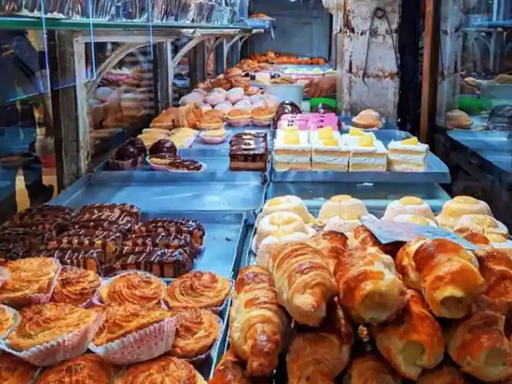
Modern-day food historians documenting "Kolkata Classics" on Instagram still call this North Kolkata mithai shop's sweetened milk delicacy one of the best desserts in the entire city — a review earned against 180 years of competition. Nalin Chandra Das & Sons is a reminder that Kolkata's oldest institutions are not museum pieces; they are still winning on taste, not nostalgia alone.
5. Dilkhusha Cabin (est. 1900) — Where Revolutionaries Hid in Plain Sight
"Dilkhusha" means heart-pleasing, and for over 120 years this College Street institution has lived up to its name — though its early customers had more than appetite on their minds. Dilkhusha Cabin was built with private wooden cabins that gave revolutionaries linked to Kazi Nazrul Islam and Barindra Ghosh a discreet place to plot against the British, hidden behind an ordinary lunch order. The cabins were finally removed in 2011, but the dish that made the place immortal, the kabiraji cutlet — meat or fish wrapped in a lacy, deep-fried egg batter — is unchanged, still served alongside its well-loved doi chicken and veg cutlet.
6. Allen Kitchen (est. circa 1920, 140+ years of legend)
Founded by Jiban Krishna Saha, Allen Kitchen in Shobha Bazar operates just five hours a day and is packed for every one of them. Its prawn and mutton cutlets have been drawing queues for well over a century, proof that in Kolkata, scarcity — a short window, no branches, no shortcuts — only deepens devotion.
7. Mitra Cafe (est. 1920) — The Cabin That Refused to Disappear
One of the last surviving "cabin" culture cafes near Sovabazar Metro, Mitra Cafe has served kabiraji, brain chop, and mutton chop since the 1920s. Its narrow, cluttered dining room and out-the-door queues are themselves part of the experience: specials here can sell out within an hour of opening, a supply-and-demand puzzle that has held steady for over a hundred years.
8. Nahoum & Sons (est. 1902) — Calcutta's Last Jewish Bakery
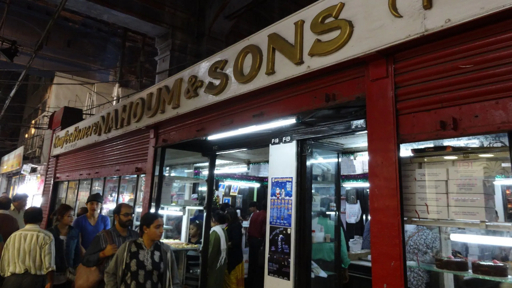
Hidden inside the maze of New Market, Nahoum & Sons is one of the most poignant survivors on this list. Founded in 1902 by Nahoum Israel Mordecai, a Jewish entrepreneur from Baghdad, it once served a thriving Calcutta Jewish community that has since dwindled to a handful of families. Its plum cakes, cheese patties, marzipan, and pizza puffs are now baked from recipes passed down through generations of the same family, and every Christmas the queue outside snakes deep into the market — a century-old testament to a diaspora that shaped the city's palate long after most of its people left.
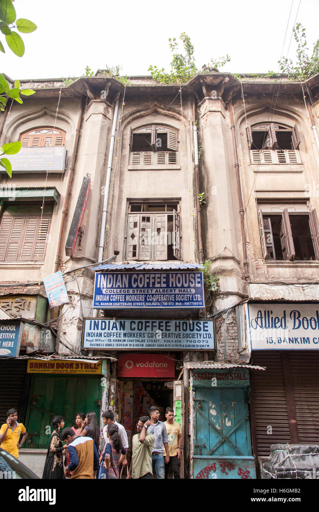
9. Indian Coffee House, College Street (roots to 1876, reopened 1958)
The building traces back to 1876 as Albert Hall, a meeting hall founded by social reformer Keshab Chandra Sen. The Coffee Board turned it into a coffee house in 1942, and Rabindranath Tagore, Netaji Subhas Chandra Bose, Satyajit Ray, and Amartya Sen all pulled up a chair here at some point in their lives. When the outlet nearly shut down in 1958, professors from Presidency College and the University of Calcutta petitioned to save it, and it reopened as a worker-run cooperative — a model it still runs on today. The Bengali song immortalizing "Coffee House"-style adda captures exactly what still happens here daily: endless cups of coffee, louder arguments, and zero hurry to leave.
10. Flury's (est. 1927) — Calcutta's English Tearoom, Still Ticking
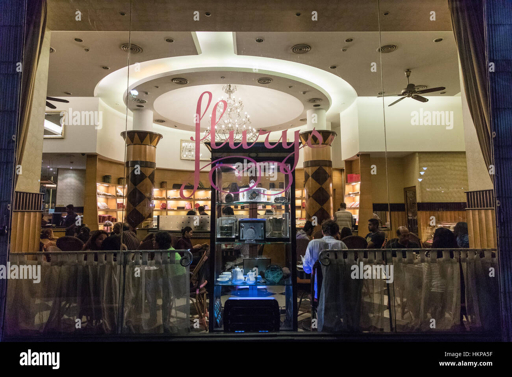
Opened by Mr. and Mrs. J. Flury in 1927 on Park Street, this Swiss confectionery became the address of choice for the city's British and Anglo-Indian elite, and later, for its most famous film director. Satyajit Ray reportedly visited nearly every Sunday morning for breakfast, without fail. Nearly a century later, Flury's still bakes its English breakfasts, rum balls, and fruitcakes behind the same pink signage, a rare case of a colonial-era institution that outlived the empire and thrived under it.
Why These Places Still Matter
What ties Bhim Nag's 1826 sandesh counter to Flury's 1927 tearoom is not just age — it's continuity through upheaval. These ten eateries have survived the end of colonial rule, Partition, the decline of the Jewish and Anglo-Indian communities that built some of them, real estate pressure that has erased countless contemporaries, and a century of changing Bengali taste. Visit College Street on a single afternoon and you can trace all of it in three stops: a kabiraji cutlet at Dilkhusha Cabin, a coffee-fueled argument at Indian Coffee House, and a rajbhog from Putiram on the walk back — a two-century conversation, served hot.